Transforming learning experiences thru internet

The journey of the internet has been nothing short of transformative at both the individual and societal levels. As a key driver for human progress, the internet has spurred major milestones in the form of innovation, marking the path of evolution in this millennium.Today’s children live in a world where the Internet of Things (IoT), data analysis or Big Data, artificial intelligence, and virtual, augmented, or mixed reality exist as a norm. Under such circumstances, what role do parents, guardians, and educators play in guiding the children who grow up in this modern era? According to a survey by the Bangladesh Bureau of Statistics (BBS), 38.1 percent of households now have internet access, with 29.7 percent in rural areas and 63.4 percent in urban areas. The proportion of households with computers has risen from 5.7 percent in 2013 to 8.7 percent in 2022, with rural areas at 3.1 percent and urban areas at 25.6 percent.Children are gradually exposing to techs at home, using internet to share study materials and connect with teachers and peers globally. Platforms like Coursera and 10-Minute School are providing digital learning opportunities to millions of students in Bangladesh.When done right, the use of the Internet in education can help children by increasing learning opportunities and building lifelong digital skills. A groundbreaking UNICEF-LSE report surveyed nearly 15 thousand children across 11 countries on internet use. It found that the activities children engage in online, even those typically seen as entertainment is crucial for building digital skills.The internet’s integration into education empowers students to become independent learners. They can conduct online research, share notes, access academic databases, and participate in distance learning programs. In STEM fields, virtual laboratories offer cost-effective experimentation and simulation opportunities. Teachers leverage online tools like educational games and multimedia presentations to enhance lesson engagement. Advanced AI technologies foster crucial skills like communication and problem-solving, enriching learning experiences with unique resources.The internet transforms learning by providing unparalleled access to a wide range of educational resources, including textbooks, multimedia materials, and online libraries. This democratization of knowledge empowers students from diverse backgrounds to pursue their educational goals, fostering inclusivity in education.Moreover, the internet facilitates the infusion of technology into classrooms, enabling educators to embrace innovative teaching methodologies. Platforms like Google Classroom, Microsoft Teams, and Khan Academy serve as essential tools for delivering personalized instruction, fostering collaboration, and providing real-time feedback. For instance, the coding platforms such as ‘Scratch’ and ‘MakeCode’ are integrated into curricula, where students learn block-based coding languages. This hands-on approach not only cultivates computational thinking and problem-solving skills but also equips students for the challenges of the digital era.The internet’s influence extends beyond connectivity, catalyzing the growth of edtech startups and companies in Bangladesh. Pioneers like Brain Station 23, CodersTrust, and Sheba Platform Limited are leveraging technology to develop educational apps, online learning platforms, and tailored digital content, enhancing access to quality education.As a parent, it is normal to feel worried about raising a child in the world of an ever-changing technological and digital landscape. However, the truth is that technology can be a powerful tool when it comes to education. It can leave an immense positive impact on the children’s overall development. While the transformation of the internet has occurred very quickly over time, the power is in our hands as to how we want to leverage the benefits of this transformation. Ashfia Ashraf is computer science teacher at Glenrich International School Published in: Daily-sun
Learning beyond books

Ramesh Mudgal writes on moulding well-rounded individuals with the power of modern education FOURTEEN-YEAR-OLD Abrar went to the chemistry teacher the other day to discuss his difficulty understanding the reversibility of chemical reactions. Merely chalking out different equations on the board and introducing references from the book would not have helped him comprehend the topic on a fundamental level. So, the teacher heads to the laboratory with Abrar to conduct practical investigations of chemical equations that are reversible. In the laboratory, the teacher places an ice cube on a dish and after some time, the ice cube melts and turns into water. Then, the teacher pours the same water from the dish back into the ice cube box and puts it in the freezer. The water turns into an ice cube again. ‘What can we say about the water’s physical change from ice to liquid and then again to ice from the liquid?’ the teacher asks. ‘The melted ice cube can be re-frozen. So, we can say that this is a reversible physical change. This means that when magnesium ribbon burns in the presence of oxygen in the air, it becomes magnesium oxide in powder form and cannot go back into this original form. This means it is an irreversible reaction?’ Abrar replies. Through this practical activity, Abrar was able to solve the difficulty without the necessity of having to read and memorise academic books. Education is not only about putting information in, it is also about drawing out the skills and understanding from the learners that is lying dormant in them. Recent studies reveal that students retain up to 75 per cent of the material when engaged in active, hands-on learning, compared with a mere 5 per cent through traditional lecture-based methods. Educators who seek to increase learning retention should not only focus on delivering the information to students. They must also focus on generating interest in the topic, gaining the learner’s attention and creating innovation in classrooms. Most people actually remember what they have learnt based on what happens inside their minds. Memory becomes easier based on attention, thinking, and the ability to make connections. Simply put, people will remember what their minds pay attention to and what causes them to think. For decades, there has been evidence that classroom techniques designed to get students to participate in the learning process produce better learning retention. The right kind of education is one that is not limited to books. Learning beyond books engages students with hands-on experiences in union with what has been learnt in the classroom. When students discover and sort information by collaborating with others, they create solutions to problems based on authentic experience and feedback. When a creative, collaborative and enjoyable approach to problem-solving is applied to education, students can enjoy a more enhanced learning experience. The most effective learning occurs when students are actively involved in the learning process. Arthur Poropat, a lecturer in psychology at Australia’s Griffith University, conducted the largest-ever review of personality and academic performance. Porporat has found that an individual’s personality traits are better indicators of academic success than a high score on an intelligence test, for students at both high school and college. Specifically, he suggests that students who are conscientious, open and emotionally stable have the best likelihood of succeeding in their studies. As students learn more, they grow and transform internally as well. Personal growth and transformation are essential aspects of childhood development and progress. They involve the continuous process of self-improvement, self-reflection and self-discovery. Modern education that uses the practical use of knowledge learnt in class and real-life experiences offers holistic personal growth and enables individuals to evolve, adapt and thrive in an ever-changing world. It allows students to broaden their horizons, develop their potential, and make meaningful contributions to society. As the world evolves with each passing year, so must education. Today’s education system does not have to be only well-developed but also flexible to adjust to the ongoing advancements in the fields of technology and human way of life. Academic success, soft skills, extracurricular interests, cultural awareness, among the children, and character development all can be achieved with experimental learning. Experiential learning is the idea that experiences are generated through ongoing interactions and engagement with the world around us and learning is an inevitable product of experience. This kind of modern-day learning is a life-long interactive process that involves questioning, critical thinking, finding newer meaning in a conventional subject and applying knowledge gained from the challenges faced in every situation. Against the backdrop of the ever-evolving 21st century, the realm of education extends beyond the traditional confines of textbooks. Under such circumstances, learning beyond books is crucial. This is because it engages learners in practical experiences that apply theoretical knowledge. The approach evolves into a holistic system, transitioning teachers from mere dispensers of information to facilitators of experiential learning. The end result? Well-rounded individuals are ingrained with critical thinking, problem-solving, creativity and adaptability. Published in: Newagebd
Why celebrations are essential for schools
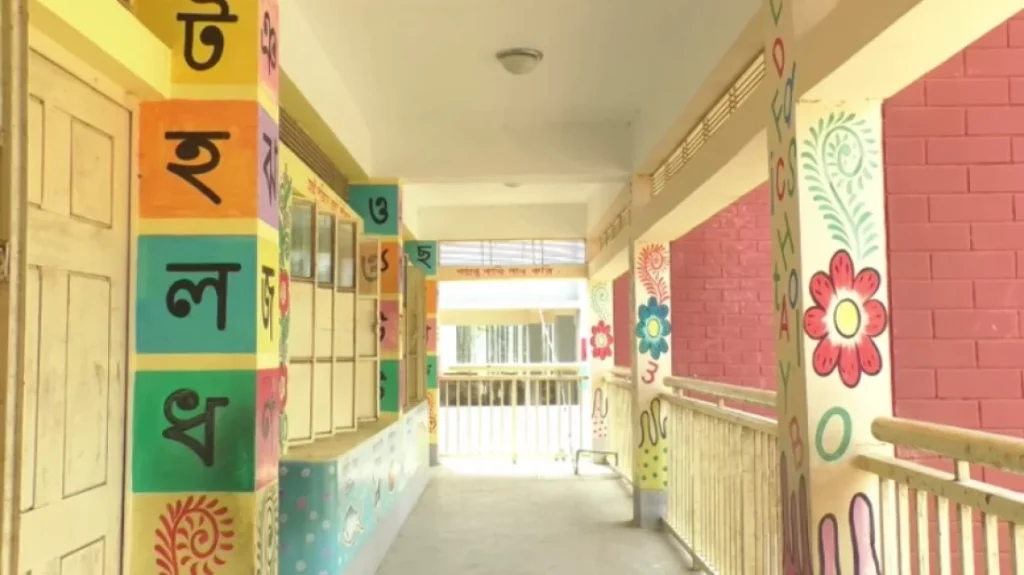
To provide a bright educational future for the youth of Bangladesh, schools across the country must create meaningful, safe, and supportive learning environments. One only has to glance over recent news items to understand the challenges, problems, and pressures children nowadays face. According to a study report published in BMJ Psychiatry, 73.5% of the school-going adolescents in the country are experiencing stress symptoms. When the study was published, the researchers commented that exposure to cultural activities and other extracurricular things like debates can help learners overcome such stress and become more active in the classrooms and learning process. This is where the role of celebrations at schools comes in. In this context, it is mentionable that educators, in recent times, are not only expected to teach academic skills to the children but also to prepare them for life. That’s why equipping children with emotional and social skills is a growing interest among educators now. Creating a sense of community in the classroom is an essential way of fostering competence in emotional and social skills. For example, celebrations can be used to build a sense of school community, recapture the joy in learning, ease transitions, acknowledge achievements and efforts, and show gratitude. The practice of numerous celebrations accomplishes and maintains a classroom learning community. Celebrations have the magical power to take everyone out of their mundane routine of daily life, especially the children and teachers. Educators should celebrate various cultures yearly to foster global awareness among children. Cultural day helps create empathy and understanding, transcends geographical barriers and exposure to different values, and enriches their perspective of diverse cultures. Celebrations mean people get the chance to be creative and decorate and organize events in such a way that will heighten the enjoyment. It allows educators to create fun activities for the children and allow them to decorate. Such initiatives expose them to diverse art forms. Whether it’s painting, sculpture, or decorating the doors with paper crafts, arts have unique powers of stimulating children’s imagination and curiosity, while also promoting creativity. Any kind of celebration can bring people together and forge connections, which helps build a thriving community filled with fruitful collaboration and respect. By coming together, the students can interact with other peers, teachers, staff, and parents, which helps break the differences and establish a cohesive environment. It also promotes inclusivity, as celebrating various cultures or events sends a clear and powerful message of acceptance and unity. Cultural celebrations ensure children are part of the community, regardless of background, gender, or race. School celebrations of multiple cultures and events lay a strong foundation of inclusivity, establish a healthy learning environment, and promote diversity. Besides, celebration breaks the monotony of regular classes and ensures dynamic and enriching educational experiences. School celebrations are not simple festivity occasions, but they can play vital roles in shaping the overall development of students and helping them embrace cultural and national awareness. These engaging and interactive events help children develop ethics, creativity, academics, and community involvement. Rumayla Mannan is Activities and Events Coordinator, Glenrich International School, Dhaka. She can be reached at [email protected]. Published in: Dhaka Tribune
Basic Enquiry Form Twitter

Enquiry FOrm
Basic Enquiry Form LinkedIn
Enquiry FOrm
Basic Enquiry Form Youtube
Enquiry FOrm
Basic Enquiry Form Instagram
Enquiry FOrm
Glenrich Newsletter – February 2024
Glenrich Newsletter – February 2024 Junior School Newsletter Senior School Newsletter
Learning by doing: Going beyond textbooks to raise exceptional young adults.

The Business Standard / Ramesh Mudgal / December 23, 2023 Source: Learning by doing: Going beyond textbooks to raise exceptional young adults | The Business Standard (tbsnews.net)
Mr. Ramesh Mudgal of Glenrich International School Satarkul

Cholpori News / By Katerina Don / November 20, 2023 A Reader and a Leader Glenrich International School Satarkul welcomed its first batch of students this year into a newly built campus in Sun Valley, Satarkul. The five-story campus is equipped with sports facilities, a high end auditorium,, music rooms, and a roller skating rink, swimming pools, basketball courts, cricket nets and a football field. The entire school has high speed wifi connectivity with every classroom equipped with Interactive Flat Panel. The institution offers the Cambridge curriculum in addition to a list of embedded enrichment programs such as Curriculum Embedded Robotics, Music Curriculum of ABRSM and additional French Language course from Alliance Francaise.. The core philosophy of the institution is to go beyond academics and be a ‘School of Life’, preparing young students for a future where innovation and interconnectedness are paramount. At the heart of this thriving institution is Mr. Ramesh Mudgal, a visionary educator and administrator who has dedicated his career to steering students and institutions towards success. When it comes to my students, I want them to be compassionate individuals, independent thinkers and productive contributors. A Passionate Advocate for Reading As the principal of Glenrich International School Satarkul, Mr. Mudgal embodies the qualities of an avid reader, a proponent of early robotics education, and an exceptional administrator. He firmly believes that a strong reading habit is the cornerstone of academic success. “Reading is an essential part of learning. It’s a very impactful habit to have and without reading, you’re not learning much.” Under his leadership, Glenrich International School Satarkul is establishing a rich library and reading programs, fostering a culture of literacy that encourages students to develop a lifelong passion for reading. This investment will enhance academic performance and help students become more empathetic and well-rounded individuals. Introduction to Computing and Robotics from a Young Age Mr. Mudgal is a strong advocate for early exposure to robotics and technology. He firmly believes that students should be digitally literate and have strong STEM foundational education from a young age. This not only equips them with essential skills for the future but also instills a love for problem-solving and innovation. Glenrich International School Satarkul boasts cutting-edge robotics programs that challenge students to think critically and creatively. Mr. Mudgal has set up similar programs around the world which have nurtured a generation of young engineers and inventors who are poised to make a significant impact on the world. The Art of Administration Mr. Ramesh Mudgal’s administrative skills are exemplary. His leadership is not limited to the school – he is also a content creator and coach. With a career spanning several international schools, he has honed his expertise in managing educational institutions. His ability to lead and inspire a diverse team of educators and staff is a testament to his commitment to creating an enriching and harmonious environment for both students and professionals. He is committed to building glocal systems that are grounded in local culture but plugged into the world. “Gone are the days when you could probably shut yourself down and write a book or something like that. And then publish it after three months, four months, five years, and all, there is a lot that is in six months, the world would have changed completely. There will be so many new things coming up over there. So, networking is very important because you will grow as an individual. When you are in contact with the others, when you seek support from the others, when you learn from the others. And when you build on the strength of others, I think that’s very important.” said Mr Ramesh. His leadership philosophy revolves around the belief that “it takes a village to raise a child.” Mr. Mudgal recognizes the importance of involving parents, teachers, and the community in a child’s education. He has made himself available to parents, with monthly “Coffee With the Principal” hours and engaging community events like “food crafting” for parents and students. He encourages open lines of communication and collaboration, allowing everyone to contribute to the growth and development of the students. Glenrich International School Satarkul: The GLENRICH Approach Under Mr. Mudgal’s leadership, Glenrich International School Satarkul has adopted a unique approach that can be best described by the acronym “GLENRICH.” Each letter represents a core value that the school embodies: This holistic approach to education ensures that students not only excel academically but also grow into compassionate, innovative, and responsible global citizens. Mr. Ramesh Mudgal looks forward to developing more opportunities to bring school to life and life to school. As the world changes, institutions like Glenrich and educators like Mr. Mudgal are ensuring that the next generation is well-prepared for the challenges and opportunities of the future. Source: Mr. Ramesh Mudgal of Glenrich International School Satarkul – blog.cholpori