
The Real Meaning of Family Time
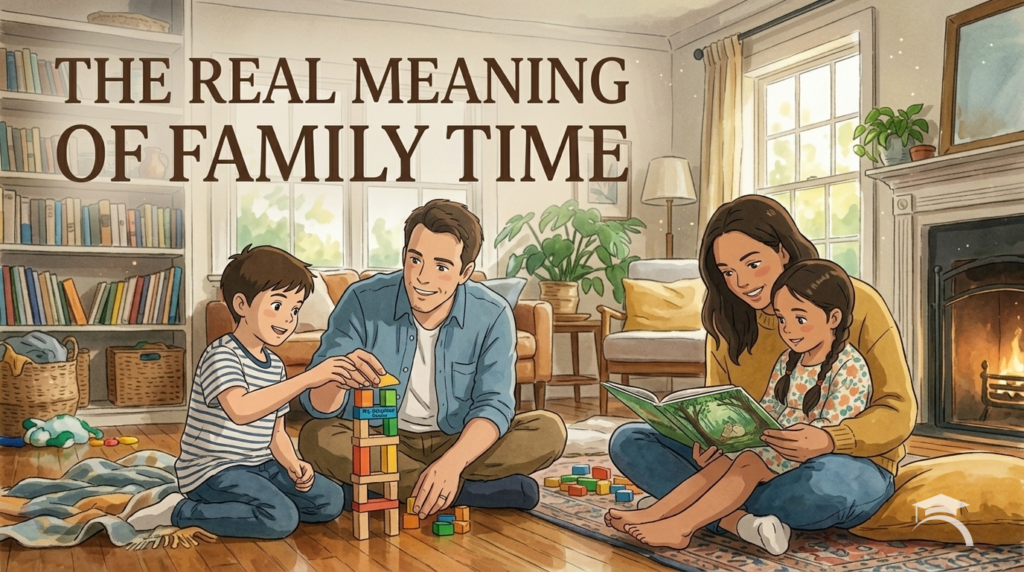
The concept of family time encompasses more than mere shared activities; it represents a sacred opportunity for bonding and connection among family members. Engaging in family time fosters emotional support, strengthens relationships, and cultivates a sense of belonging. It is essential for nurturing unity and understanding within the family unit, ultimately contributing to the overall well-being of its members. Prioritizing quality family time can lead to lasting memories and a deeper appreciation for one another. Ms Narayani Ambikanandhan As an educationalist, I often meet and hear parents say, “We spend time together as a family.”But I want all of us to pause and ask, what kind of time is it really?Let me give you an example of what I saw. Last week, I noticed a family sitting together in a renowned restaurant. It was a wonderful sight to see the entire family – mom, dad and threechildren eating out together. However, I did not feel like it was family time at all! ‘They were in the same room, but not truly together.’ Sadly, the truth! Yes, the children were on their tablets -busy playing games, the father was answering official emails, and the mother was scrolling through social media. There was a huge difference between being together as a family and having quality family time. Most of the time, we misinterpret family time as taking kids out on a weekend to the mall or a fancy restaurant, which is not family time at all.Now, let me help you change the above scenario to show how the same set-up can be made into a quality family time. A discussion from the menu about what to order, talking about likes and dislikes, discussing ingredients, cracking funny jokes and tossing tablets and phones to change the dinner table into a lively Family time.I remember my childhood days, when my father used to act as a hotel waiter, who just said, “At your service, ma’am’ and brought food from the kitchen and set the table, helping my mom. My brother and I help by filling water, setting plates. Then, while eating, dad appreciates or comments on the taste of the food, followed by sharing stories about how my parents’ childhood used to be, how limited options were and whatnot. No mobiles, no technology, only the real talk chat creating real family time, which had always been a cherished memory. Family time isn’t about the place—it’s about the presence. A restaurant can be just another meal, or it can become a memory. The difference lies in choosing connection over distraction. Remember, you don’t need to take your kids out to show that you are spending quality time. You can do the same at home, too – changing your dinner table into a lively family time. Let’s make family time intentional, making every moment spent together meaningful. Put away distractions, create simple rituals, and focus on connection. That’s the heartbeat of home—and the foundation for a child’s growth.
AI-Montessori: Classrooms for Generation Beta
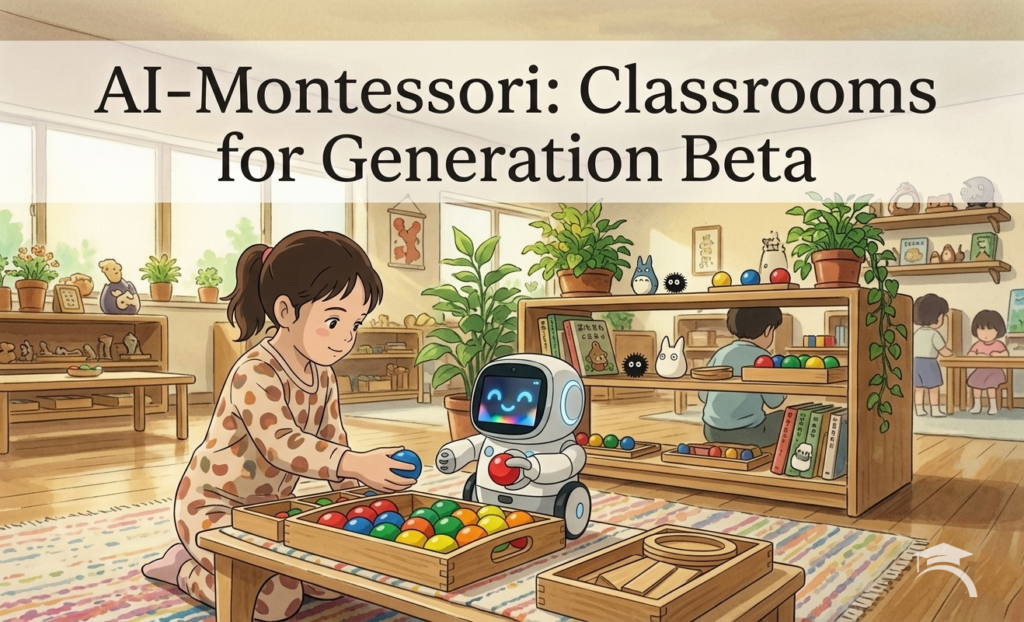
Dr. Amlan K. Saha Maria Montessori (born 1870) and her educational methodology remain highly pertinent even after 150 years. We recently completed a two-day workshop on Montessori Education at Glenrich International School, Uttara, for our educators, aimed at enhancing learning effectiveness for our young students. A compelling exercise in the current landscape is to envision the future of AI-integrated Montessori classrooms. Montessori classrooms operate on the fundamental principle that children achieve optimal learning outcomes when allowed to explore at their individual pace. Artificial intelligence (AI) is a powerful enabler of personalized learning, making it a natural complement to the Montessori approach. AI-driven learning tools, akin to a Montessori facilitator, can monitor a child’s progress and subsequently adapt challenges to align with their unique learning rhythm. AI-powered tutoring systems, such as Carnegie Learning, deliver personalized feedback and support. Furthermore, adaptive AI tools like Duolingo are capable of tailoring learning experiences to individual needs. Consider an AI-powered reading assistant that meticulously analyzes a child’s pronunciation and provides gentle, teacher-like corrections, or a mathematics program that automatically adjusts complexity based on a student’s demonstrated mastery of foundational concepts, akin to a Montessori approach. AI-driven platforms are capable of assessing student skill levels in real-time and customizing instructional content to address individual requirements. Storytelling is a crucial pedagogical tool; however, imagine children co-authoring narratives with an AI partner, thereby constructing their own imaginative worlds and characters. This process inherently fosters creativity, a cornerstone of Montessori education. Furthermore, this integration of AI will accelerate early digital literacy in our digital-first society. AI also significantly enhances educational games by developing engaging and adaptive learning experiences, a fundamental principle within the Montessori philosophy. Through direct engagement with artificial intelligence, students can acquire a practical understanding of algorithmic functions and data processing, which aligns with the future integration of AI into Montessori education. At Glenrich, we are actively pursuing this innovative approach and are poised to become the first institution in Bangladesh to implement Screen-Free Coding within Montessori Pre-Primary classrooms. While the foundational principles of Maria Montessori will endure, they can be effectively combined with contemporary AI tools to enhance the learning experience for Generation Beta.